Develops the world's first solid oxide fuel cell drone and demonstrates long-distance flight - Expected to use LPG fuel for logistics, infrastructure inspections, disaster response, etc. in various regions -
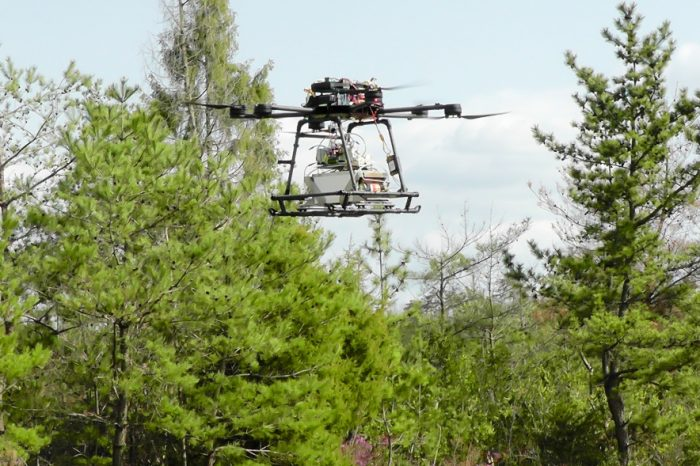
Solid oxide fuel cell drone undergoing flight test
Prodrone Co., Ltd. (Representative Director: Masakazu Kono, hereinafter referred to as PRODRONE), Atsumi Tech Co., Ltd. (Representative Director: Hideyuki Suzuki, hereinafter referred to as Atsumi Tech), Environmental Technology Center (Director: Naoki Uchiyama), National Institute of Advanced Industrial Science and Technology (Director: Kazuhiko Ishimura, hereinafter referred to as AIST), Extremely Functional Materials Research Division (Research Director: Ichiro Matsubara), Hiroshi Sumi The principal researcher demonstrated for the first time in the world a solid oxide fuel cell (SOFC) drone that can fly and work for long periods of time.
This time, we have developed a SOFC system that can generate electricity even in the sky by increasing the output and reducing the weight (60% less weight per output than conventional SOFC stacks) that can use liquefied petroleum gas (LPG). By supplying power generated by SOFC to drones and secondary batteries, flight and work times can be extended. We have also developed an internal reforming SOFC technology that can stably reform LPG into hydrogen and carbon monoxide inside the electrode, even when the drone's power load fluctuates significantly. Since it is powered by LPG, which is versatile and easy to carry, it is expected to contribute to areas such as logistics, infrastructure inspection, and disaster response, even in areas where hydrogen infrastructure is not yet in place.
This research and development was supported by the National Research and Development Agency New Energy and Industrial Technology Development Organization (NEDO)'s ``Project for Realizing an Energy-Saving Society in which Robots and Drones Are Active''.■ Social background of development ■In recent years, one of the concrete measures to create new industries has been the creation of an environment for expanding the industrial use of unmanned aerial vehicles (drones). Drones and robots are expected to be used in the field of logistics, where more efficient energy use is required due to the increase in small-lot transportation and declines in loading rates, the field of infrastructure inspection, where reducing resources by extending the lifespan of infrastructure through effective and efficient inspections is an urgent issue, and the field of disaster response, where it is necessary to quickly investigate on-site damage instead of people.
However, the lithium-ion polymer (LiPo) secondary batteries that are commonly installed as a power source for drones have a low energy density per unit weight, so the flight and operation time is limited to about 15 to 30 minutes. Since the power consumption of a drone is proportional to its weight, it is not possible to mount a large number of secondary batteries, and when carrying heavy items such as cargo for logistics or measuring equipment for infrastructure inspections, the flight and operation time becomes even shorter. Furthermore, in the event of a disaster, it may be difficult to secure a power source for charging, and it is assumed that secondary batteries may become unusable. To solve these problems with secondary batteries, development of drones equipped with polymer electrolyte fuel cells (PEFC) powered by pure hydrogen is underway in Japan and abroad, but there are issues such as difficulty in procuring fuel in areas where hydrogen infrastructure has not yet been established.■ Development history ■PRODRONE develops and sells industrial drones that can be used for logistics and infrastructure inspections. In particular, it has world-class advanced technology for large drones that can carry payloads of 30kg or more (maximum payload) and drones equipped with robot arms that can perform direct operations. Meanwhile, AIST has demonstrated a SOFC "handy fuel cell system" that can generate electricity using LPG cassette cylinders (January 28, 2013, AIST press release), and the National Research and Development Institute We conducted basic studies toward mass production in the New Energy and Industrial Technology Development Organization (NEDO) project ``Technology Development for Practical Application of Solid Oxide Fuel Cells, etc./Next Generation Technology Development/Micro SOFC Type Compact Generator (FY2013-2014)''. Later, in collaboration with Atsumi Tech, we developed a ``Compact High Power Fuel Cell System'' that improves the output and durability of SOFC (AIST/Atsumi Tech Press Announcement, February 9, 2017).
This time, with the help of NEDO's ``Project to Realize an Energy-Saving Society Where Robots and Drones Are Active / Research and Development for Improving Energy-Saving Performance, etc. / Research and Development of Fuel Cell Drones that Achieve Long-Term Work (2017-2019),'' we have further increased the output and weight of the LPG-driven SOFC system, developed internal reforming SOFC technology that responds to fluctuations in the power load of the drone, and developed a drone that can be equipped with the SOFC system.■ Development details ■Figure 1 shows the appearance of the SOFC stack developed by Atsumi Tech for use in drones. A flat plate cell was adopted to improve the output density per unit volume. By improving the components used to collect the generated electricity, the output density per electrode area has been dramatically improved to about twice that of conventional products. Furthermore, in order to connect multiple flat cells in series, a separator is required to separate fuel and air between the cells and to provide electrical connections. By applying Atsumi Tech's metal processing technology and devising the shape of the separator to reduce weight, we were able to reduce the weight per output by 60% compared to the "Compact High Power Fuel Cell System" announced in 2017. By installing this SOFC stack on a drone, it is possible to reduce the weight by several kilograms and thereby reduce power consumption, contributing to the realization of long-duration flight and work.
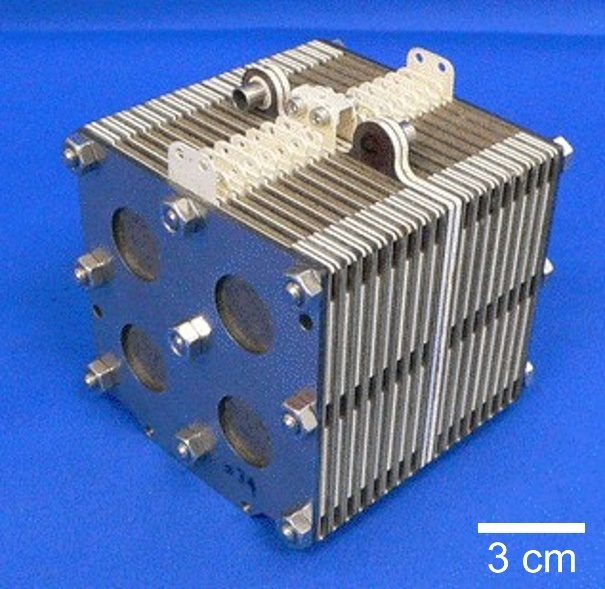
Figure 1 Exterior view of SOFC stack for drone installation
Figure 2 shows the appearance of the newly developed LPG-powered SOFC system. This SOFC system uses internal reforming SOFC technology developed by AIST. By reforming LPG into hydrogen and carbon monoxide inside the electrode, commercially available LPG cassette cylinders can be used as fuel, making it usable even in areas where hydrogen infrastructure is not yet in place. Generally, when LPG fuel is directly supplied to an existing SOFC, carbon precipitation occurs on the fuel side electrodes (fuel electrode, negative electrode) due to thermal decomposition of butane, which is the main component of LPG, and the electrode performance rapidly deteriorates. For the "Compact High Power Fuel Cell System" announced in 2017, we developed nanostructured electrode materials and operation control technology that can suppress deterioration of electrode performance due to carbon deposition under conditions of constant power generation and operating temperature and no power load fluctuations. This time, AIST has developed a new internally reformed SOFC technology that does not deteriorate electrode performance even if the power generation amount and operating temperature of the SOFC change rapidly due to fluctuations in the power load of the drone, and has incorporated it into the SOFC automatic start/power generation/stop control system designed by Atsumi Tech. This eliminates the need for an external reformer, which is installed in devices such as the home fuel cell system ``Ene-Farm,'' even for drones with large power load fluctuations, contributing to system simplification and weight reduction.
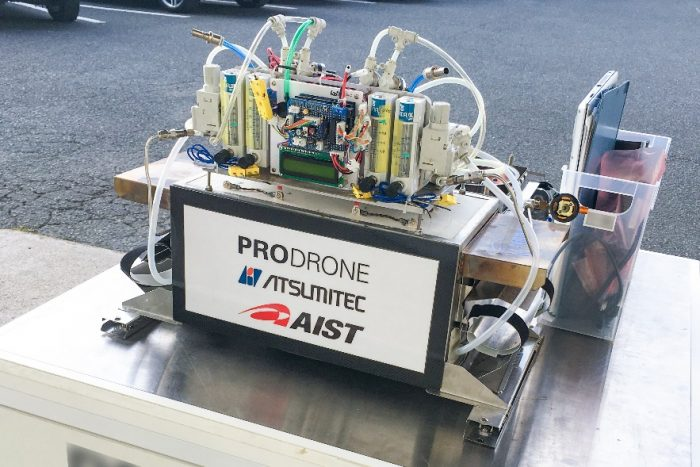
Figure 2 Appearance of LPG-driven SOFC system
Figure 3 shows the SOFC drone during flight testing. PRODRONE has developed a drone that can be equipped with an LPG-powered SOFC system and can carry a payload of up to 30kg. In order to cope with the increased weight due to the SOFC system installation, measures have been taken to reduce power consumption per unit of weight as much as possible. In addition, the design is such that propeller vibrations, airflow, and shock during takeoff and landing do not affect the operation of the SOFC system. Figure 4 is a schematic diagram of the power supply for a conventional drone and a SOFC drone. While conventional drones are powered only by LiPo secondary batteries, with SOFC drones, when the drone's power load is heavy, power is supplied from the SOFC and LiPo secondary battery to the drone, and when the power load is light, power is supplied from the SOFC to the LiPo secondary battery for charging. By optimizing the output control of the SOFC-LiPo secondary battery hybrid power supply system, it is expected that long-duration flights and operations exceeding one hour will be possible. By demonstrating for the first time in the world that SOFC can be applied as a power source for drones flying above the sky, it is expected that SOFC will be applied to a variety of mobile objects and robots in the future.
Figure 3 SOFC drone during flight test
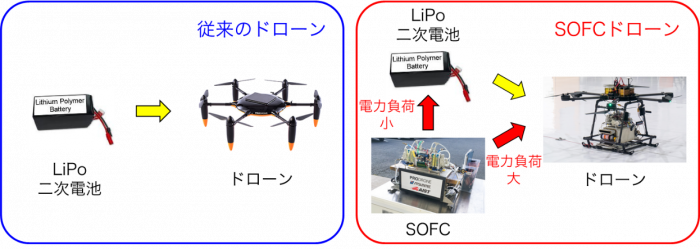
Figure 4 Schematic diagram of power supply for conventional drones and SOFC drones
■ Future plans ■In order to enable drones to fly and work for even longer periods of time, we will advance improvements such as increasing the output and weight of the SOFC system, optimizing the hybrid power supply system, and reducing the power consumption of drones, aiming to quickly commercialize SOFC drones that can be used in fields such as logistics, infrastructure inspection, and disaster response.
==================================================================[Explanation of terms]◆Solid oxide fuel cell (SOFC)
A fuel cell that uses solid oxides (ceramics) such as zirconia (ZrO2) and ceria (CeO2) as the electrolyte. They generally operate at high temperatures of 650 to 800 degrees Celsius, and are expected to have the highest power generation efficiency among all types of fuel cells. Since oxide ions (O2-) conduct within the electrolyte, in principle not only hydrogen but also hydrocarbons such as propane (C3H8) and butane (C4H10) can be used as fuel. SOFC stands for Solid Oxide Fuel Cell.
◆Drone
Common name for unmanned aircraft. Items that can be used for aviation purposes and cannot be flown by a person due to their structure, but can be flown by remote control or autopilot. Overseas, it is also called UAV (Unmanned Aerial Vehicle).
◆Liquefied petroleum gas (LPG)
The main ingredients are propane and butane. Even at room temperature, propane can be easily liquefied at approximately 0.8 MPa (8 atm) and butane at approximately 0.2 MPa (2 atm). In Japan, it is distributed as LPG cylinders for household and commercial use, cassette cylinders for small combustion equipment, and LPG automobile fuel.
◆SOFC stack
A structure in which multiple SOFC cells and conductive separators are arranged alternately and electrically connected in series. The voltage and current per cell are just under 1V and about 1 to 10A, respectively, so connecting them in series can increase output. The separator also serves to separate fuel and air between cells.
◆SOFC system
It incorporates insulation to keep the SOFC stack warm, a startup burner, a fuel/air supply system (piping, blower (pump), etc.), and a power control system (DC converter (AC inverter), control unit, etc.).
◆Internal modification
Conducting a reaction inside the electrode to reform hydrocarbons such as LPG into hydrogen (H2) and carbon monoxide (CO), which are more likely to undergo chemical reactions in fuel cells. Internal reforming improves power generation efficiency because there is no heat loss between the reforming section and the fuel cell, but performance deterioration due to carbon precipitation inside the electrodes is more likely to occur, so technologies such as controlling the nanostructure of the electrodes and controlling the fuel composition are important.
◆Lithium polymer ion (LiPo) secondary battery
A secondary battery that uses lithium ions (Li+) as a conductor and a gel-like polymer as an electrolyte. With a high voltage of 3.7V per cell, it is easier to make smaller and lighter than other secondary batteries (lead-acid batteries, nickel-cadmium batteries, nickel-metal hydride batteries, etc.). It is widely used as a power source for mobile phones, smartphones, laptop computers, etc.
◆Polymer electrolyte fuel cell (PEFC)
A fuel cell that uses solid polymers such as fluorine-based polymers with sulfonic acid groups as the electrolyte. They generally operate at low temperatures, ranging from room temperature to 80 degrees Celsius, and are used in fuel cell vehicles, etc. Pure hydrogen is generally used as a fuel because hydrogen ions (protons; H+) are conducted within the electrolyte. PEFC stands for Polymer Electrolyte Fuel Cell.
◆Flat cell
A fuel cell whose support is plate-shaped. Since SOFCs are mainly composed of ceramics, various shapes of SOFCs have been developed, including not only plate-shaped cells but also cylindrical cells with a cylindrical support. In recent years, fuel electrode supported cells have become mainstream, in which the fuel side electrode is used as a support and the electrolyte with the highest electrical resistance is made into a thin film.
◆Carbon deposition
Solid carbon is deposited by thermal decomposition of hydrocarbons such as LPG. When carbon is deposited on SOFC electrodes, power generation performance is significantly reduced due to deactivation of the electrode catalyst and blockage of the fuel flow path.
◆External modification
Conducting the reaction to reform hydrocarbons such as LPG into hydrogen and carbon monoxide outside the SOFC. In household fuel cell systems such as the Ene-Farm, an external reformer is installed before the SOFC stack to prevent performance deterioration due to carbon deposition on the SOFC electrodes.
==================================================================
This article has been automatically translated into English using AI. The original content is written in Japanese. While we strive for accuracy, the translation may not fully capture the nuance of the original.
Related News

Establishment of Prodrone's First Mass Production Plant within Howa Machinery - Notice Regarding Third-Party Allotment of Shares with the Company as the Subscriber -